A Roof System Built to
Protect What Matters Most
Learn what goes into a professionally installed roofing system — and why every layer matters for the long-term protection of your home.
WHAT MAKES A
QUALITY ROOF SYSTEM?
A roof is more than shingles. It's a carefully layered system where every component plays a critical role — and every shortcut shows up eventually.
GAF Roofing System · Certified Installation
Proper Installation Is Everything
The best materials in the world underperform when incorrectly installed. Every layer must be applied in the right sequence, with the right fasteners, in the right conditions — that's what separates a roof that lasts 30 years from one that fails in 8.
"A roof is only as good as the hands that installed it."
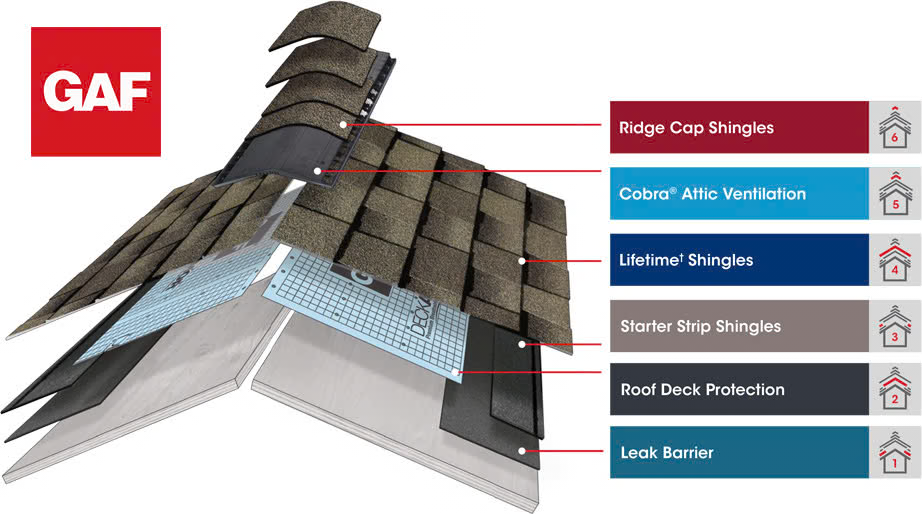
Leak Barrier
Ice & Water ShieldA self-adhering waterproof membrane installed at the eaves, valleys, and vulnerable areas. This is your first line of defense against water intrusion during ice dams or wind-driven rain.
Skipping this layer is one of the most common causes of interior water damage and early roof failure.
Roof Deck Protection
UnderlaymentA secondary moisture barrier installed over the entire decking surface beneath the shingles. It protects the home if shingles are ever lifted, cracked, or compromised.
Without proper underlayment, even a small gap in shingles can allow moisture to reach your roof deck and cause structural rot.
Starter Strip Shingles
Perimeter ProtectionPre-cut shingles installed along the eaves and rakes to seal the edges of the roof system and prevent wind uplift from the bottom course of shingles.
The starter strip is critical in high-wind areas — without it, shingles at the edges are significantly more vulnerable to peeling.
Lifetime Shingles
Primary Weather DefenseThe outermost layer of your roof system. Premium architectural shingles provide decades of protection against UV exposure, wind, rain, and impact while giving your home its finished appearance.
Material quality and proper nailing patterns directly determine how long your roof performs. We use GAF and manufacturer-certified materials on every job.
Attic Ventilation
Cobra Ridge VentA continuous ridge vent system that allows hot air and moisture to escape the attic space. Proper ventilation regulates temperature and prevents moisture buildup beneath the roof deck.
Poor ventilation traps heat and moisture in the attic, causing shingles to age prematurely and decking to warp or rot — often voiding manufacturer warranties.
Ridge Cap Shingles
Peak Finish & SealSpecially designed shingles that cover the peak of the roof, providing a finished appearance while sealing the most vulnerable point where two roof planes meet.
Using standard shingles bent over the ridge — a common shortcut — leads to cracking, leaks, and premature failure at the peak.
OUR PROCESS
From the first call to the final walkthrough — you always know exactly what's happening and why.
Free Inspection
We assess your current roof, identify damage, and give you an honest evaluation with no pressure.
Detailed Estimate
You receive a clear, itemized estimate — every layer, every material, every cost explained upfront.
Tear-Off
We remove the existing roofing system down to the deck, inspecting for any hidden damage or rot.
Deck Inspection & Repair
If the plywood decking shows damage, we replace it before anything goes on top. We won't build on a compromised foundation.
Full System Installation
Every layer is installed in the correct sequence using manufacturer-approved methods and premium materials.
Cleanup & Final Walkthrough
We clean the entire property, run a magnet for nails, and walk you through the completed work before we leave.
THE DETAILS THAT MATTER
Warning Signs
Many homeowners don't realize their roof needs replacing until significant damage has already occurred.
- Shingles that are curling, cracking, or missing granules
- Visible sagging or soft spots on the roof surface
- Water stains on ceilings or in the attic
- Shingles missing after storms or high wind events
- Roof system is 20+ years old with no inspection history
- Daylight visible through roof boards in the attic
- Excessive moss, algae, or dark streaking across the surface
Why Cheap Roofs Fail
Skipped Layers
Budget contractors often eliminate the leak barrier or use inferior underlayment to lower costs. What they save upfront, you pay for in water damage later.
Incorrect Nailing
Improperly nailed shingles are one of the leading causes of wind damage. Manufacturer warranties can be voided by incorrect fastening patterns.
No Proper Ventilation
Without adequate attic ventilation, heat and moisture are trapped — aging shingles years faster and causing structural rot from the inside out.
Low-Grade Materials
Entry-level shingles may look similar but perform dramatically worse under UV, impact, and thermal cycling over time.
How Long Should It Last?
Assumes proper installation, ventilation, and maintenance.
Why Ventilation Matters
A properly ventilated roof allows hot, moist air to continuously escape the attic. Without it, summer heat builds to 150°F+ — cooking shingles from underneath, warping decking, and enabling mold growth. Most manufacturers require proper ventilation to honor their warranty.
WHAT TO EXPECT DURING A RE-ROOF
READY TO PROTECT YOUR
HOME THE RIGHT WAY?
No pressure. No hard sell. Just an honest conversation about what your home needs — and a clear plan to get it done right.